
Shophouses
Peranakan Shophouses of Chinatown: A Street-by-Street Guide
The ornamental language of Straits Chinese architecture — from stucco vegetation to hand-painted ceramic floor tiles — concentrated in a handful of central streets.
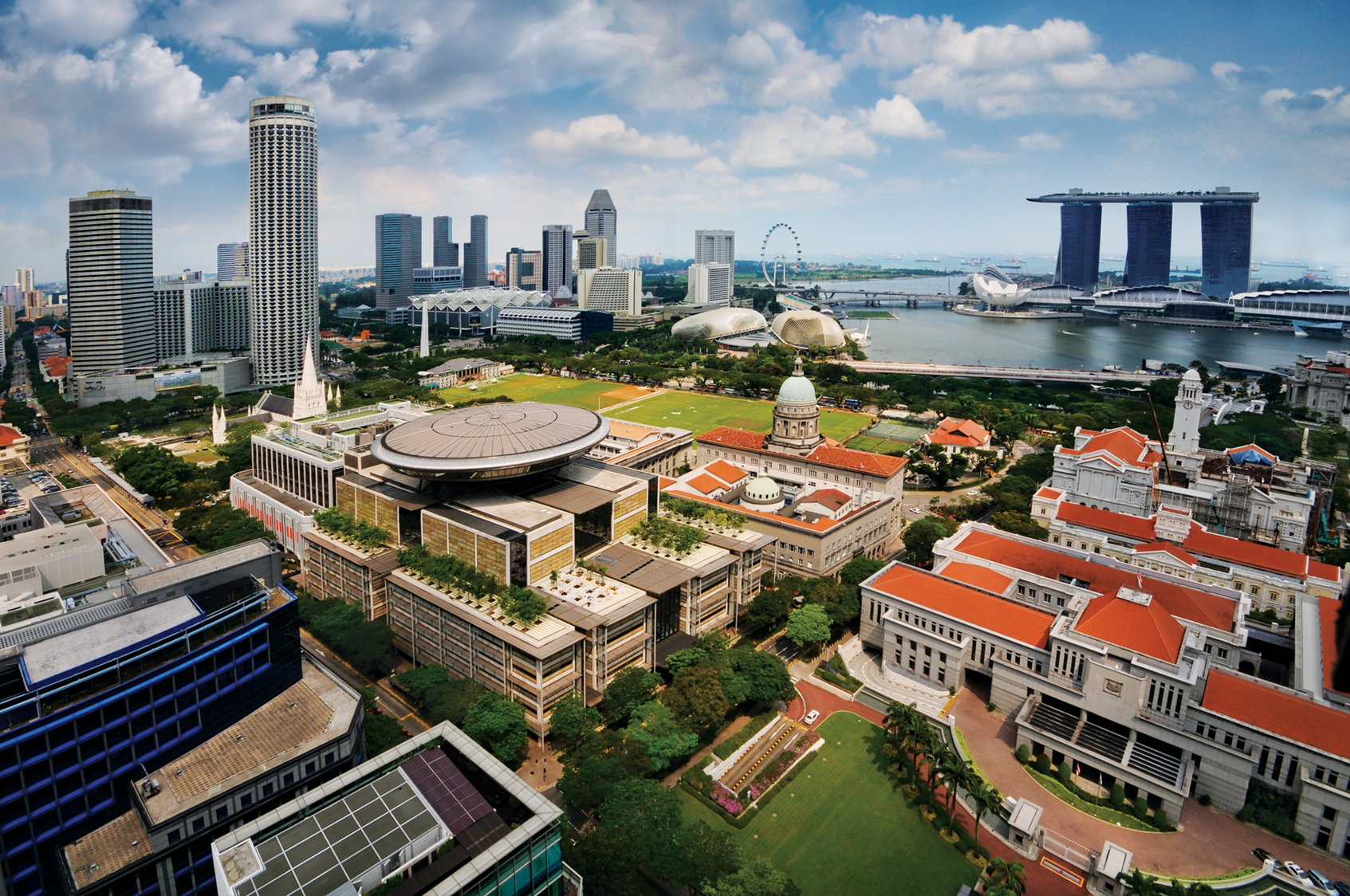
Singapore's conservation precincts protect some of Southeast Asia's most intact urban streetscapes — from five-footway shophouses in Chinatown to neoclassical courts in the Civic District.
Read about URA Conservation
Five distinct styles — Early, First Transitional, Late, Second Transitional, and Art Deco — reflect successive waves of immigrant craftsmanship and colonial building codes between the 1840s and 1960s.
Straits Chinese families transformed terraced shophouses with glazed ceramic tiles, carved timber screens, and stucco floral motifs that blend southern Chinese decorative traditions with Malay and European influences.
The Civic District retains a concentration of Palladian and neo-Renaissance public buildings — the Supreme Court, City Hall, and Victoria Theatre — built under British administration to signal permanence and order.
Singapore's conservation policy balances adaptive reuse with strict retention of facades, structural elements, and roof profiles. Gazetted status protects a building from demolition but permits interior adaptation.
Bounded by New Bridge Road, Maxwell Road, and South Bridge Road, Chinatown holds the largest single concentration of conserved shophouses in Singapore — nearly 900 individual units across eight streets.
Former warehouses along the Singapore River now house galleries, restaurants, and co-working spaces. The same structural bones carry entirely different programmes while retaining the visual scale of the original waterfront.

Chinatown's Smith, Pagoda, Temple, and Trengganu streets were among the first to receive conservation status in 1989. The decision was contested: critics argued it would freeze out working-class residents. What followed instead was gradual commercial gentrification, with ground-floor retail giving way to tourism-facing businesses while upper floors retained residential tenancies for decades.
The URA's colour guidelines — specifying compatible palettes for facade repainting — have maintained the chromatic rhythm of terracotta, ochre, and pale green that nineteenth-century Chinese builders established. Property owners must seek approval before repainting, ensuring no single block disrupts the overall streetscape.
Peranakan shophouse guide
The ornamental language of Straits Chinese architecture — from stucco vegetation to hand-painted ceramic floor tiles — concentrated in a handful of central streets.

The cluster of neoclassical and Palladian public buildings between St Andrew's Road and the Singapore River documents the administrative priorities of successive colonial governments.
Singapore's conservation framework manages more than 7,100 gazetted buildings across residential, commercial, and civic precincts through a tiered system of controls.
The stretch from Empress Place to Connaught Drive concentrates Singapore's most architecturally ambitious colonial structures. Built between 1827 and 1939, these buildings — designed by public works engineers and private architects working within British classical conventions — used local granite, Malayan hardwoods, and imported Italian marble.
Their scale was deliberate: the Supreme Court's dome, visible from the Singapore River, communicated the authority of British law. The Victoria Theatre's clock tower matched the skyline of the Colonial Secretary's offices. Today these relationships persist in a changed city, the colonial silhouettes framed by glass towers behind them.
Explore Civic District buildings
For research enquiries, corrections, or contributions to this archive, use the form below. Response time is typically two to three working days.