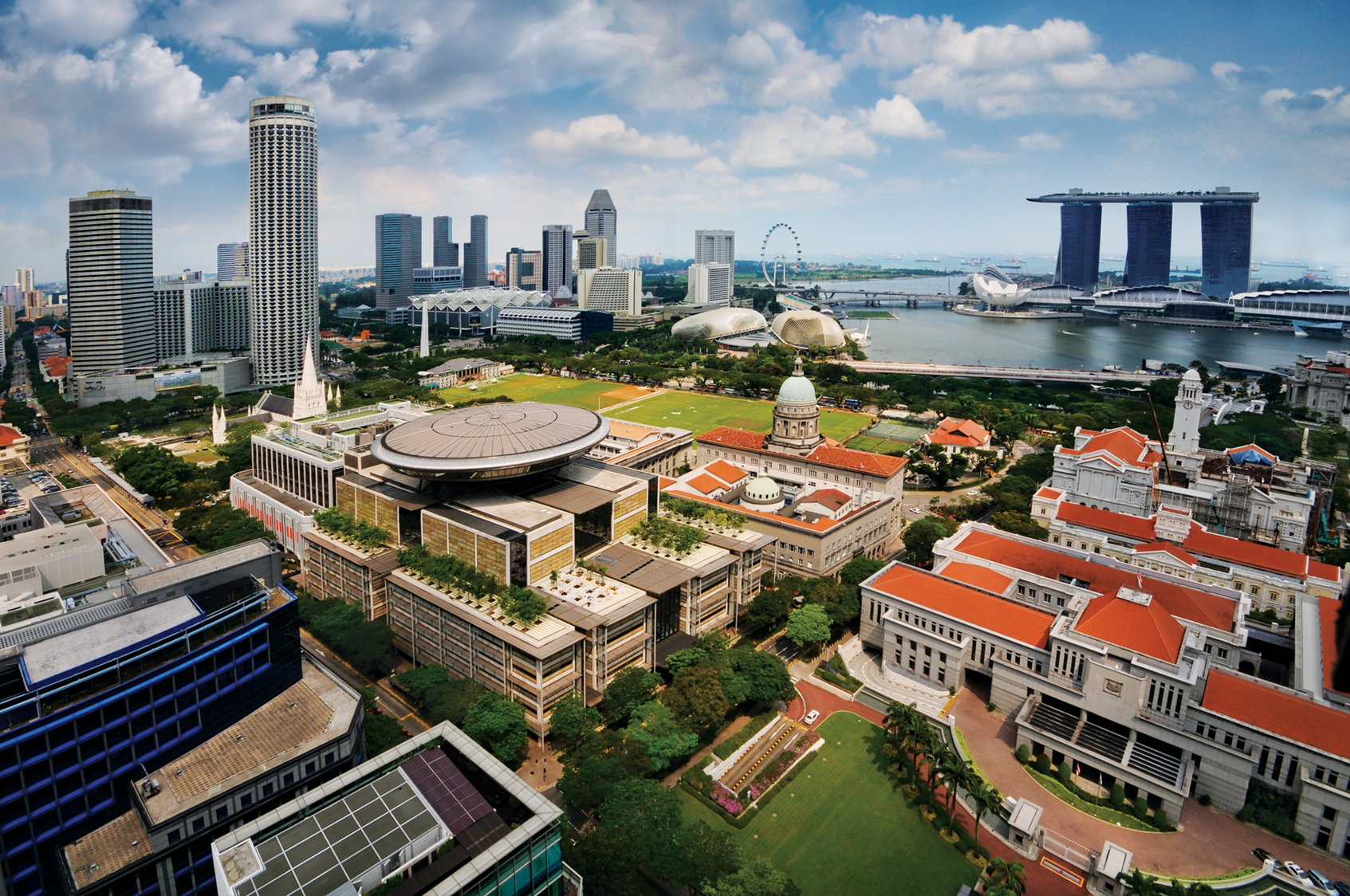
Singapore's conservation framework is unusual among Asian cities for the scope of what it protects and the consistency with which it has been applied since the 1980s. Over 7,100 buildings are gazetted for conservation across the island, concentrated in defined precincts but also scattered as individual monuments throughout the urban fabric. The Urban Redevelopment Authority (URA) administers the framework under the Planning Act, with the National Heritage Board responsible for monuments under the Preservation of Monuments Act.
This article describes how the framework operates — what gazettement means in practice, how precincts are defined, what owners can and cannot do, and how the framework has evolved since its formal establishment in 1989.
Origins: from clearance to conservation
The shift in Singapore's official attitude toward its built heritage was not gradual. Through most of the 1960s and 1970s, the Housing and Development Board's clearance and redevelopment programmes had been celebrated as evidence of modernity and progress. Chinatown's crowded pre-war shophouses were characterised in official documents as unsanitary and structurally inadequate. Their demolition was the point.
By the late 1970s, this position had begun to change. International conservation thinking — influenced by the 1964 Venice Charter and the 1975 European Architectural Heritage Year — had reached Singapore's planning establishment. More practically, Hong Kong's successful conservation of Tsim Sha Tsui and the commercial tourism value of Georgetown's shophouse streets in Penang had demonstrated that pre-war urban fabric could generate economic value.
The URA conducted its first formal conservation study in 1971, focusing on Chinatown. The study produced detailed building surveys and recommended retention of specific streets. Implementation was slow: the political will to interrupt redevelopment momentum took another decade to build. The decisive shift came under the Prime Ministership of Lee Kuan Yew, whose 1986 speech to the Singapore Institute of Architects framed conservation as an economic and cultural priority rather than a sentimental one.
The first gazette notices, protecting Chinatown, Little India, Kampong Glam, and the Civic District as conservation areas, were issued in 1989. The formal Conservation Master Plan was published by the URA in 1989.
How gazettement works
A building that is gazetted for conservation is protected under Section 11 of the Planning Act. The gazette notice specifies the building (by address and lot number), its conservation status (I, II, or III under the original three-tier system, or its equivalent under the current framework), and any specific elements identified for retention.
Gazetted status does not prevent all change. It prevents demolition and requires that specific physical elements — typically the external facades, structural walls, and roof profile — be retained in their existing form. Internal layouts may be substantially modified, provided that the structural elements specified in the gazette notice are retained. Air-conditioning units, new window glazing, and new internal partitions are generally permitted subject to URA approval; removal of facade tiles, alteration of window openings, or changes to roof pitch are not.
The URA administers development applications for gazetted buildings through its Conservation and Urban Design Group. Applications for additions and alterations (A&A) to gazetted buildings require URA written permission before works can commence. The application process involves submission of existing-condition drawings, proposed drawings, and materials schedules. Approval is required even for works that would be permitted-development for non-gazetted buildings.
The five major precincts
Singapore's conservation framework organises most gazetted buildings into five major precincts in the central area, each with its own character guidelines that supplement the general conservation rules:
Chinatown
The Chinatown conservation area extends across the sub-districts of Kreta Ayer, Tanjong Pagar, Bukit Pasoh, and Telok Ayer. It is the largest single conservation precinct and contains the greatest concentration of shophouses by number. The character guidelines specify colour palette ranges for facade repainting (grouped into cool, warm, and neutral families), acceptable signage sizes and types, and restrictions on ground-floor use changes that would alter streetscape character.
Little India
The Little India precinct centres on Serangoon Road and the surrounding streets — Race Course Road, Dunlop Street, Kerbau Road — where South Indian communities established commercial and residential premises from the 1870s onward. The building stock is predominantly First Transitional and Late-style shophouses, with a higher proportion of Art Deco examples than Chinatown. The character guidelines pay particular attention to the use of colour, reflecting the South Indian decorative tradition of saturated facade colours.
Kampong Glam
The Kampong Glam precinct preserves the Malay and Arab merchant quarter that developed around the Sultan Mosque from the 1820s. The building stock includes shophouses, the mosque itself (a 1932 structure by Denis Santry replacing an earlier building), and the Istana Kampong Glam (the former palace of the Temenggong, now the Malay Heritage Centre). The character guidelines for this precinct are among the most detailed, reflecting the precinct's particular ethnic and religious significance.
The Civic District
The Civic District precinct covers the cluster of colonial public buildings between the Padang and the Singapore River. Most of the major buildings in this precinct are also gazetted as National Monuments under the Preservation of Monuments Act, which imposes stricter controls than the Planning Act conservation framework. The two layers of protection operate independently, and works to National Monuments require approval from both the National Heritage Board and the URA.
Boat Quay and Clarke Quay
The riverside precincts along the south bank of the Singapore River between Cavenagh Bridge and the Robertson Quay area protect the commercial warehouses (godowns) that serviced Singapore's entrepôt trade from the 1840s through to the mid-20th century. These buildings — typically three to five storeys, with wide loading bays at ground level — have been successfully adapted into restaurants, bars, and offices without significant alteration to their external fabric.
Individual monuments outside precincts
Not all gazetted buildings fall within the five major precincts. The URA also maintains a list of conserved buildings in residential neighbourhoods, including rows of early 20th-century terraced houses in Cairnhill, Emerald Hill, and Blair Road. These are gazetted under the same Planning Act framework but do not form part of a precinct conservation area.
Separately, the National Heritage Board has gazetted 75 National Monuments across Singapore — structures of particular historical, cultural, or architectural significance that receive additional protection under the Preservation of Monuments Act. These include the Sultan Mosque, St Andrew's Cathedral, the Thian Hock Keng Temple, and most of the major colonial public buildings in the Civic District.
Adaptive reuse outcomes
The most debated aspect of Singapore's conservation framework is the latitude it gives to interior modification. Critics argue that a building whose interior has been entirely gutted and replaced retains only the surface — a facade without the social history that made it worth keeping. Defenders argue that the alternative was wholesale demolition, and that the buildings' exteriors, streetscapes, and urban scale are the elements that matter for the public realm.
The evidence from 35 years of implementation is mixed. In the riverside precincts, adaptive reuse has been commercially successful and has preserved the scale and rhythm of the waterfront. In Chinatown, the commercial pressure on ground floors has driven out most of the residential and working-class uses that gave the area its character, replacing them with tourism retail and food and beverage. In Kampong Glam, the Malay and Arab merchant community that the precinct nominally represents has largely moved elsewhere, and the area serves a different — largely tourist — constituency.
These outcomes reflect the limits of any conservation framework that operates through property law: it can protect physical fabric, but it cannot prevent the economic forces that change who lives and works in a place. The URA's character guidelines can specify facade colours but cannot specify rent levels or tenant mix.
What the framework has successfully protected is the scale of the city — the relationship between building height, street width, and the human body that makes the conservation precincts feel different from the rest of Singapore, even when their interiors have been entirely remade.
Current policy directions
The URA reviews its conservation framework periodically. The most recent significant update, published in 2022, extended the list of conserved buildings in several residential areas and introduced more detailed facade restoration standards for Chinatown shophouses, requiring property owners to use lime-based plaster rather than cement-based products for repairs to original plasterwork.
The URA has also introduced a Heritage and Identity Partnership (HIP) scheme that provides grant funding for conservation-related repair works to gazetted buildings. The scheme covers a percentage of eligible costs for structural repairs, facade restoration, and the reinstatement of original features. Take-up has been concentrated among smaller property owners who lack the capital for full conservation-grade repairs without assistance.
Information on the current list of gazetted buildings, character guidelines, and application procedures is maintained on the URA's Conservation website. The National Heritage Board maintains the National Monuments register separately.


